
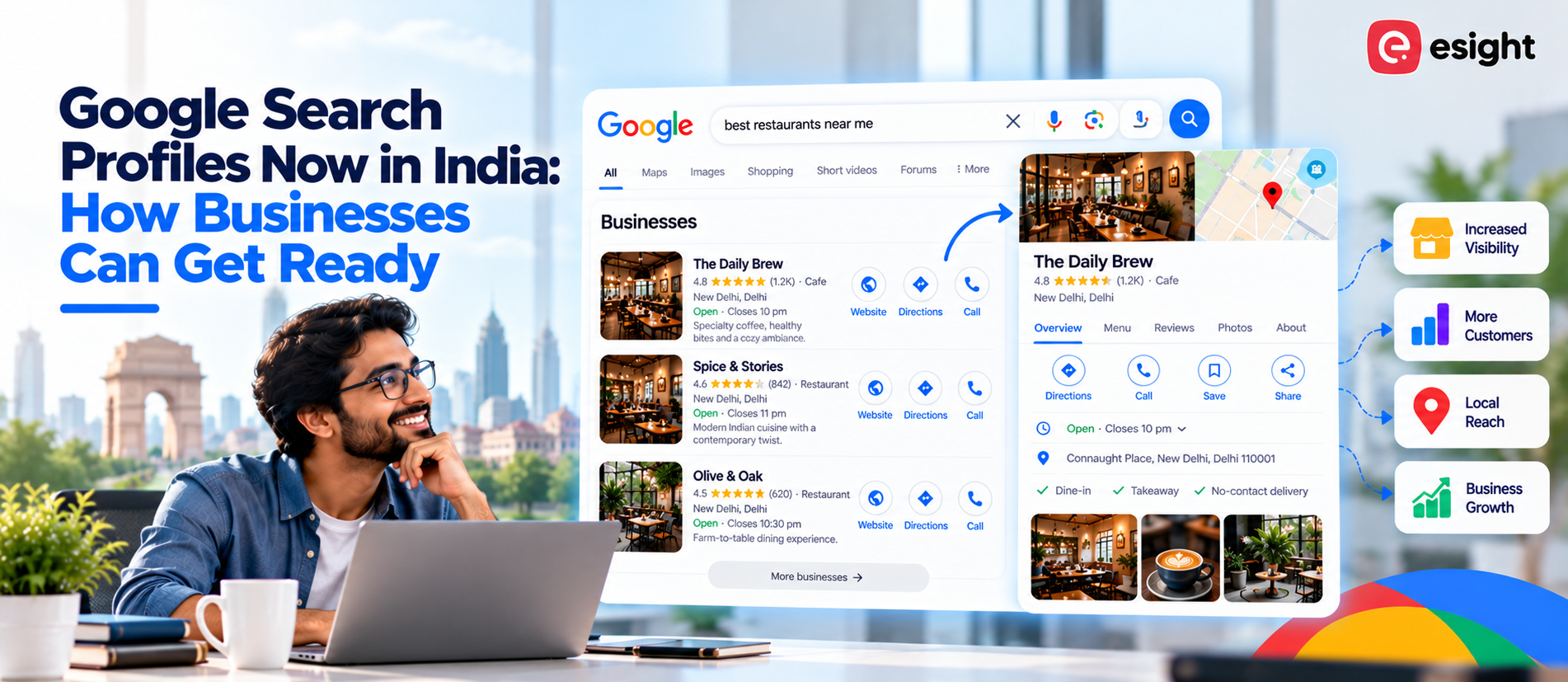
Google has opened Search profiles to creators and publishers in India. A Search profile is a claimable page that gathers your website, social accounts, posts, and links into one place on Google. For businesses, this creates a fresh opportunity to control how their identity appears in search. This blog explains what the feature does, how it differs from other Google tools, and which steps help you prepare before you claim your page.
What Google Search Profiles Are and What Changed for India
A Search profile works as a dedicated home base on Google. It pulls together a creator’s or publisher’s websites, social channels, posts, and links, so a searcher sees the full picture without hopping between platforms. The feature opened in the United States in June 2026. On October 6, 2026, Google extended it to creators and publishers in India, with Canada included and Brazil announced as next.
How a Search profile works
Once you claim a profile, Google lists your connected content on one page. People who follow it may see more of your material in Google Discover. Treat that following as a potential audience channel, not a guaranteed traffic source.
How it differs from Google Business Profile
A Google Business Profile represents a physical or service location in Google Maps and local results. A Search profile represents a creator or publisher identity and connects content across platforms. A business can hold both, and each serves a different purpose. Google also tested a similar people card idea in India in 2020.
Why the India Expansion Matters for Businesses
Discoverability across Search and Discover
Customers rarely search for a brand in a single place. They check a website, scan social posts, and read recent updates. A Search profile gathers those touchpoints, which supports content discoverability and gives branded queries a cleaner destination. The benefit is potential, because Google has not published performance figures for profiles.
A clearer brand identity for people and answer engines
Answer engines and generative search systems depend on clear entity signals. When your website, social accounts, and profile all describe the same brand in the same way, systems can connect them with more confidence. This strengthens entity recognition and supports E-E-A-T signals such as authorship and consistent identity.
Who Should Prepare First
Google frames Search profiles around creators and publishers, so businesses that publish content regularly gain the most. Typical groups include:
E-commerce brands that publish product guides, launches, and brand updates
Small and medium businesses that share expertise through blogs and social channels
Large companies that manage several content channels and want one consistent identity
Edtech platforms that release courses, articles, and learning resources
Health clinics that publish verified, educational health information
How to Get Ready Before You Claim a Profile
Audit your website and social accounts
Start by listing every official website, blog, and social account your brand runs. Remove outdated pages and dormant accounts. Make sure names, logos, and descriptions match everywhere.
Make your brand information consistent
Use one brand name, one description, and the same contact details on every platform. Consistent information helps Google connect your digital presence into a single entity and reduces the chance of mixed or outdated details appearing.
Strengthen entity signals with structured data
Add organization schema markup to your website and list your official social accounts with sameAs properties. Verify your site in Google Search Console. These technical SEO steps give Google clear evidence of which accounts belong to your brand.
Build content that shows expertise and trust
A profile only displays what you publish, so content quality decides its value. Publish accurate, original articles with named authors, clear dates, and honest sourcing. Build topical authority by covering one subject area in depth instead of scattering unrelated posts.
Use this quick checklist before you begin:
Official website and social accounts listed and cleaned
Brand name, description, and contact details identical everywhere
Organization schema and sameAs links added
Website verified in Google Search Console
Recent, expert-written content published with author names
When to Start and How to Keep the Profile Useful
Timing and regular updates
Start preparation now, because the groundwork takes time and does not depend on Google’s setup screen. Check Google’s official help page for current eligibility and requirements before you claim, since Google has adjusted requirements in the United States more than once. After launch, review your profile monthly and keep linked accounts active.
Mistakes to avoid
Common errors include:
Linking inactive or unofficial accounts
Using different brand names across platforms
Publishing thin or copied content
Expecting guaranteed rankings or traffic
Getting Expert Help With Search Profile Strategy
Preparation spans technical SEO, content planning, and brand consistency, so many businesses bring in outside support. A trusted seo company in kochi can audit your entity signals and structured data, while a reliable seo company in kerala can plan content that builds topical authority across your service areas. Esight Solutions supports businesses with SEO and digital marketing planning that fits this kind of profile readiness work.
Conclusion
Google Search profiles give Indian creators and publishers a single, claimable home on Google, and businesses that publish content can use it to present a consistent identity. Preparation matters more than speed: clean accounts, matching brand details, structured data, and trustworthy content. Esight Solutions can guide you through each of these steps so your profile reflects your brand accurately when you are ready to claim it.
Frequently Asked Questions
What is a Google Search profile?
It is a claimable page that gathers a creator’s or publisher’s websites, social accounts, posts, and links in one place on Google.
Can businesses in India create one?
Google opened profiles to creators and publishers in India on October 6, 2026. Check Google’s help page for current eligibility.
Is it the same as Google Business Profile?
No. Google Business Profile represents a location in Maps and local results, while a Search profile represents a creator or publisher identity.
Does a Search profile improve rankings?
Google has not said it is a ranking factor. The value lies in clearer identity, better content connection, and possible Discover reach.
How can a business prepare?
Audit official accounts, keep brand details consistent, add schema markup, verify the site in Google Search Console, and publish expert content.
Let’s Build Something Powerful
Tell us about your business challenge. We’ll tell you how we’d solve it.