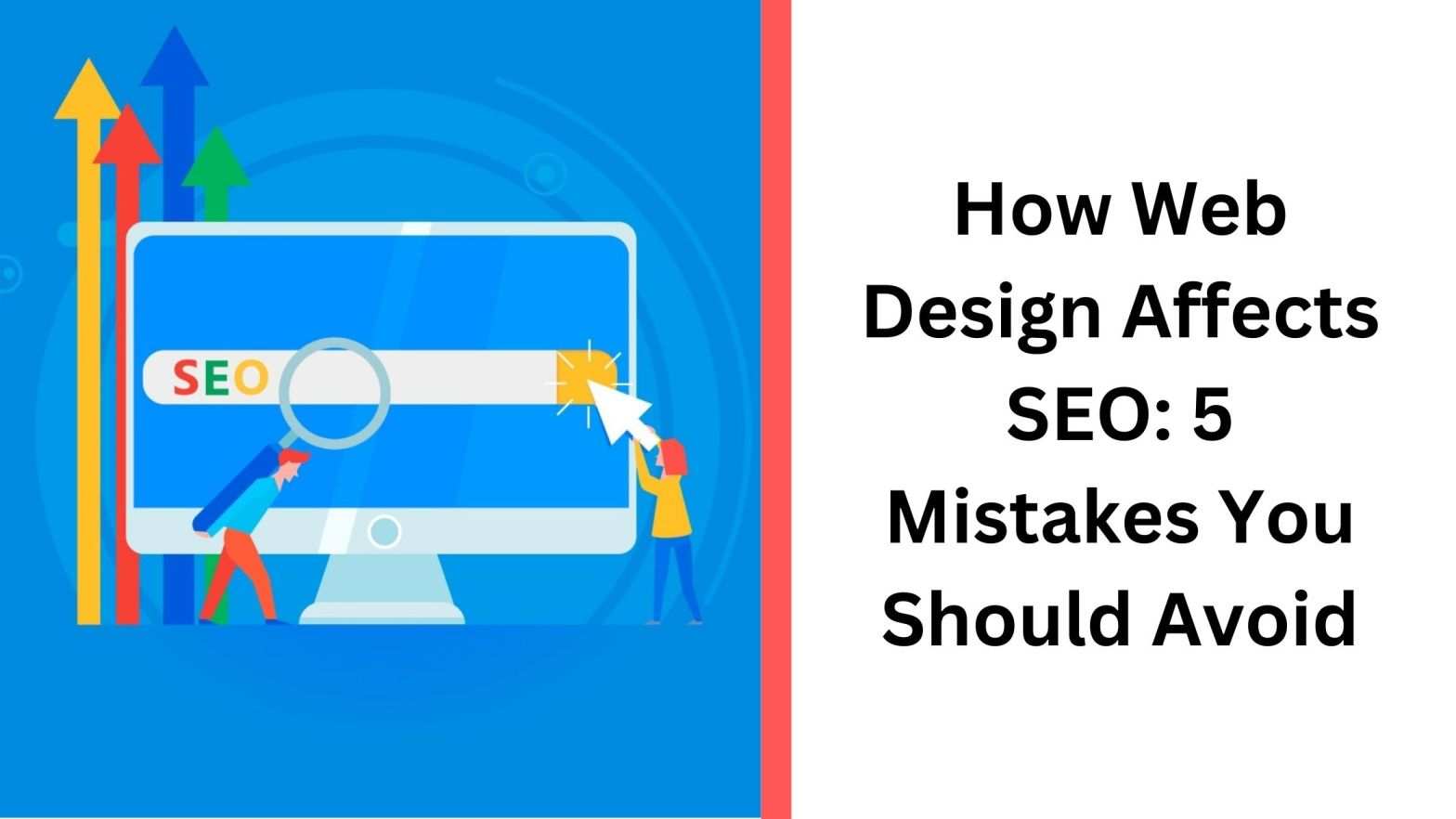
The visibility of your website suffers whenever Google performs rankings because it analyzes multiple design features within web pages. The web design requires design quality combined with functionality because your website serves as both the user interface and the key component of search engine optimization (SEO). This blog discusses five widespread web design errors that will negatively influence SEO and how to avoid those mistakes.
1. Never Ignore Mobile-Friendly Design
Every person is always connected to their devices, since mobile phones represent the primary choice today. The tremendous rise in mobile phone usage for browsing internet pages explains why over 60% of total web traffic comes from these devices. A mobile-friendly website is crucial. Google places the mobile version of websites above all other versions through mobile-first indexing for ranking purposes.
How to Fix:
You should modify all image and media files to ensure fast loading times on mobile screens.
The Google Mobile-Friendly Tool lets you verify if your website functions properly on mobile platforms.
The website should use responsive designs that automatically fit different screen sizes.
2. A slow website page frame rate drives users away
The performance of your website influences your analytics negatively when your pages take too long to load because users will bounce away, leading to both lower search engine rankings and visitor disengagement.
How to Fix:
The implementation of Content Delivery Network (CDN) represents a method to enhance website load times.
You should reduce image file size using TinyPNG optimization tools.
To prevent site loading problems, browsers receive optimized resources through minification of HTML and CSS together with JavaScript and browser cache functions.
3. Poor Navigation and User Experience (UX)
Online users become frustrated by website mess when they are likely to exit immediately. Google bases website ranking results on how individuals interact with its platform. A bad UX can hurt SEO.
How to Fix:
A simple navigation structure with an intuitive menu needs to be maintained.
Utilize descriptive and SEO-friendly URLs.
Users, along with search engines, can easily access your content through proper internal linking.
4. Failing to Implement Appropriate Heading Tags Starting from H1 to H6
The search engine decides content structure using its heading tags. Ignoring them can negatively
How to Fix:
Insert suitable keywords organically, either in your headings or titles.
Each webpage should feature only one H1 heading for its main title.
The content should be turned into readable chunks through the usage of H2s and H3s.
5. Lack of Image Optimization
Technological enhancements through images strengthen user engagement; however, their poor optimization causes website slowness that reduces search engine ranking performance.
How to Fix:
Compress the images without losing quality using WebP format.
Administration of filenames along with keyword-based naming should be used together with descriptive alt text for images.
The implementation of lazy loading will help enhance page load speed.
In conclusion, your website’s design plays a crucial role in SEO performance. If you think your website is holding back your SEO potential, at Esight, the web design and digital marketing company, we create SEO-friendly web designs that drive traffic and conversions!
Also read: Website Redesign Checklist: Is It Time for an Upgrade?
Let’s Build Something Powerful
Tell us about your business challenge. We’ll tell you how we’d solve it.